

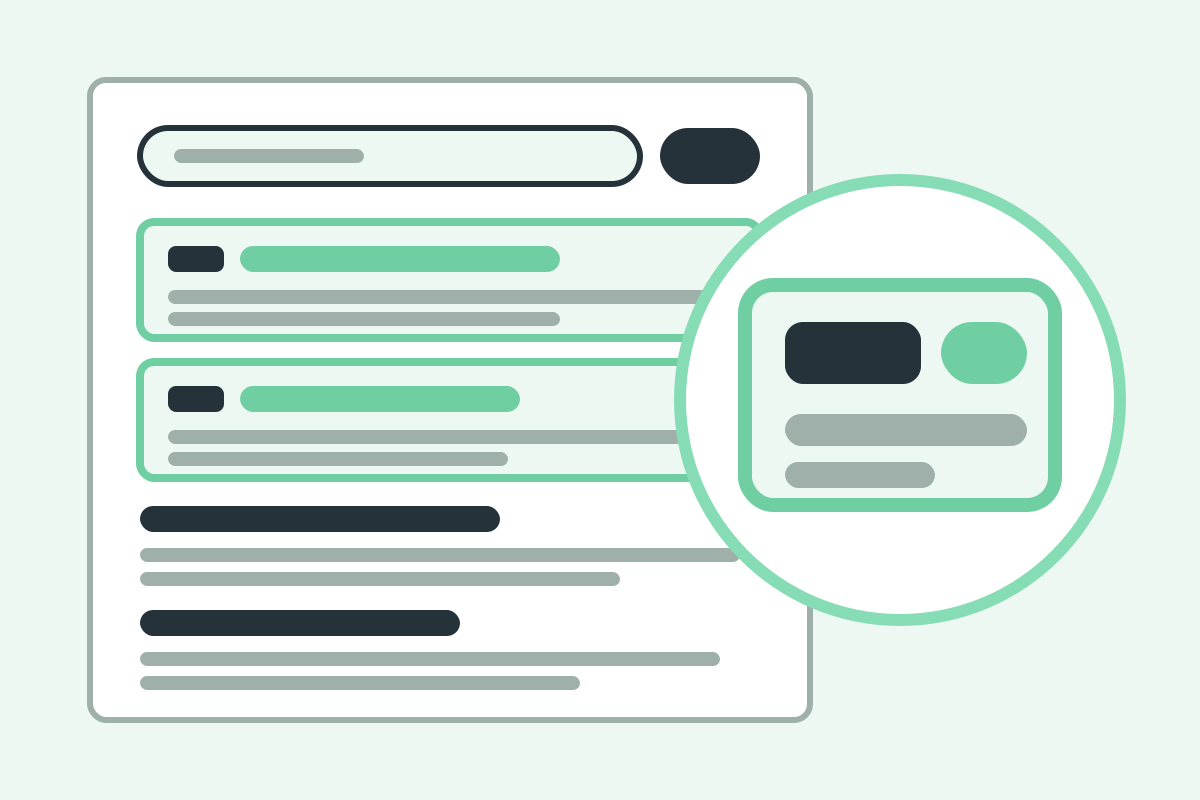
Hold a page of search results up to the light, as if it were a slide. Most of the frame is a column of plain entries. Near the top, one or two look almost the same but carry a small label that marks them as paid; Google Ads Help says that search ads can appear above or below the results. Three things put them there: a kind of ad made for that space, an auction run at the moment of the search, and a structure that an advertiser built beforehand. One invented advertiser, a bicycle repair shop, runs through all three, with a bakery and a bookshop as the other ads.
The names below are those in each platform’s own help pages in November 2026. Features, currencies and review details change over time and differ by country, and each platform’s help pages hold the version for a given market.
Four kinds of paid ads and where each appears

Search ads appear with search results. The advertiser chooses keywords, which Google Ads Help defines as words or phrases used to match ads with the terms people search for, so a search for "bike repair" can bring the shop’s ad into the auction.
Display ads appear on what Google Ads Help calls millions of websites, apps and Google-owned properties. The IAB Tech Lab, a standards body, specifies ad units by aspect ratio and size range rather than fixed pixel sizes, so one ad can fit many pages.
Social ads appear between posts in a feed. On Meta’s platforms, such as Facebook and Instagram, an ad enters an auction every time there is a chance to show it to someone in the audience the advertiser defined, for example people interested in cycling routes.
Video ads play before, during or beside videos. Among the formats for YouTube that Google Ads Help lists in November 2026 are skippable in-stream ads, which a viewer can skip after 5 seconds, and 6-second bumper ads, which cannot be skipped.
| Kind | Where it appears | What the advertiser chooses | What the ad is made of | Usually charged |
|---|---|---|---|---|
| Search | Above or below search results | Keywords and match types | Headlines and descriptions | Per click |
| Display | On websites and apps | Audiences, topics, placements | Images, headlines, logos, descriptions | Per click or per thousand impressions |
| Social | In a feed, between posts | An audience for each ad set | Images or video with text | By the objective and bid strategy chosen |
| Video | Before, during or beside videos | Audiences, topics, placements | A video | Per view or per thousand impressions |
Each time there is a space, an auction runs
The auction is not a daily event. Google Ads Help says that one takes place every time someone searches on Google or visits a site that shows ads, with a separate auction for each ad location. Meta describes the same for each chance to show an ad.
For a search, an ad takes part when one of its keywords matches. Each eligible ad gets an Ad Rank, a set of values that decides whether it can show and where. Ad Rank is calculated at every search, once for eligibility and once for position, so the same ad can move from one search to the next.
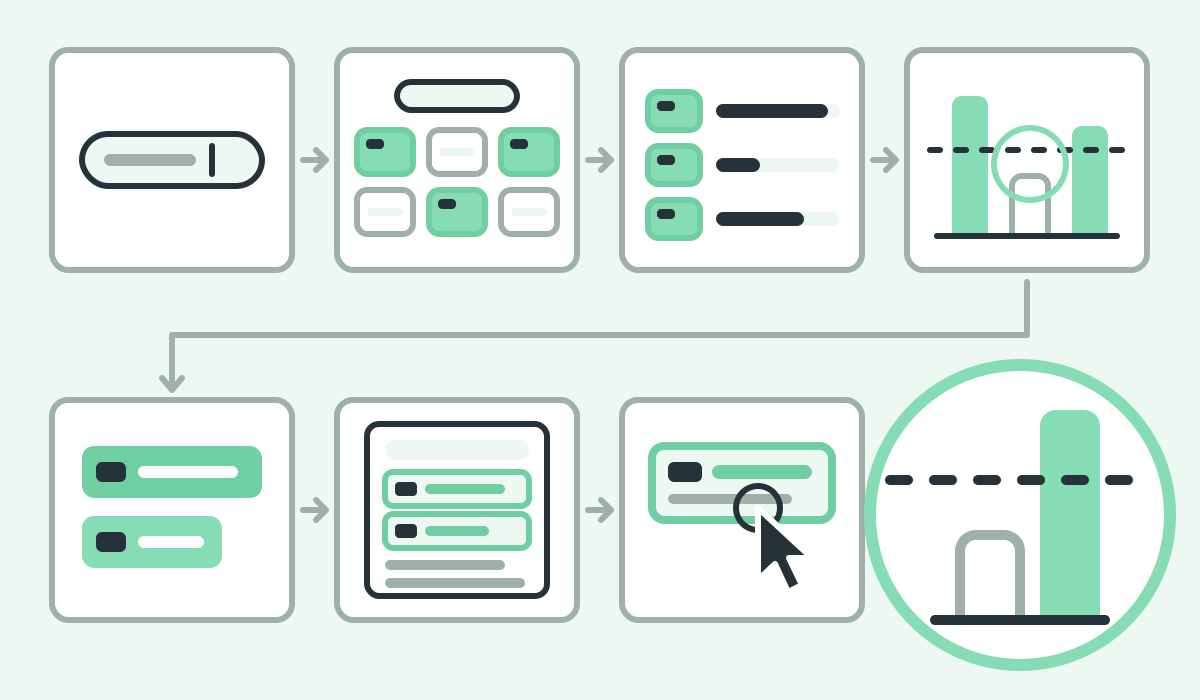
- Someone types a search.
- Ads whose keywords match the search become eligible.
- Each eligible ad is given an Ad Rank for this search.
- Ads whose rank stays under the minimum threshold are left out.
- The remaining ads are put in order.
- The page is shown, with the ads above or below the results.
- If someone clicks an ad, that click is charged.
What decides the order: more than the bid
As Google Ads Help describes it in November 2026, Ad Rank rests on six factors:
- the bid, the most an advertiser is willing to pay for a click;
- the quality of the ad and of its landing page;
- the Ad Rank thresholds;
- the competitiveness of the auction;
- the context of the search, such as the words searched, the person’s location at the time and the device;
- the expected impact of ad assets and other ad formats.
Google gives factors, not a formula or weights, and draws the conclusion itself: even against higher bids, an ad can win a higher position at a lower price with highly relevant keywords, ads and assets.
Meta’s page on ad auctions, read in November 2026, names three inputs: the bid, the estimated action rate (how likely the person is to take the action the advertiser wants) and ad quality, the last two together being what Meta calls ad relevance. In an article dated June 2020, Meta gave the arithmetic: the bid multiplied by the estimated action rate, plus the ad quality score, makes a total value, and the highest total values are shown. Ads with lower bids, it wrote, often win when the system predicts that a person is more likely to respond to them.
Microsoft Advertising’s documentation bases ad rank on factors that include the bid, ad performance and ad relevance, with a quality score from 1 to 10 built like Google’s. LinkedIn’s help page names the bid and the ad’s relevance to the member as the key factors.
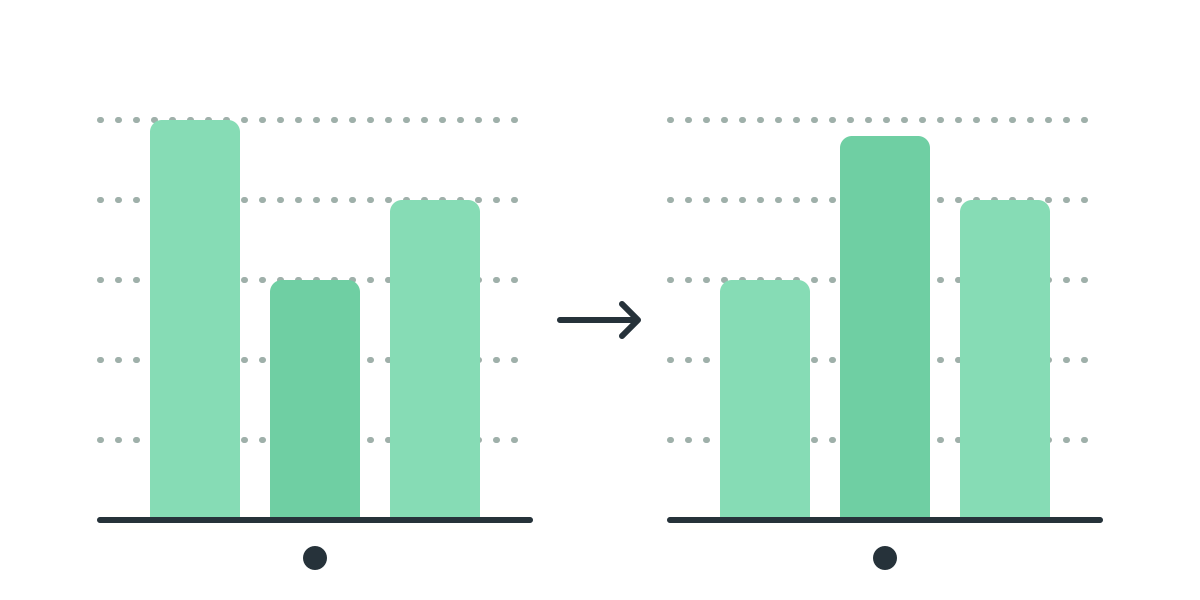
The chart below shows the direction of the effect with three invented ads competing for one space.
| Ad | Bid | Quality signal | Combined score | Order by bid | Order by score |
|---|---|---|---|---|---|
| Bakery | 10 | 3 | 30 | First | Third |
| Bicycle repair shop | 6 | 8 | 48 | Third | First |
| Bookshop | 8 | 5 | 40 | Second | Second |
What the advertiser is charged
A bid is a ceiling. Google Ads Help gives the rule for the actual cost per click: the advertiser pays only what is minimally required to clear the Ad Rank thresholds and beat the Ad Rank of the competitor immediately below, or the reserve price when no ad is below. The charge is often less than the bid and never more than the maximum bid, except with automated bidding tools. In the illustration, the bicycle repair shop’s charge would follow from staying above the bookshop, not from the bakery’s higher bid.
Video works differently: as Google Ads Help describes it in November 2026, a skippable in-stream ad with cost-per-view bidding is charged after 30 seconds of watching, the whole ad if shorter, or an interaction, while non-skippable formats are charged by impressions. The pages read for the other platforms do not state Google’s rule of paying just enough to stay above the next ad, so it is described here for Google Ads only.
The structure built before any ad appears
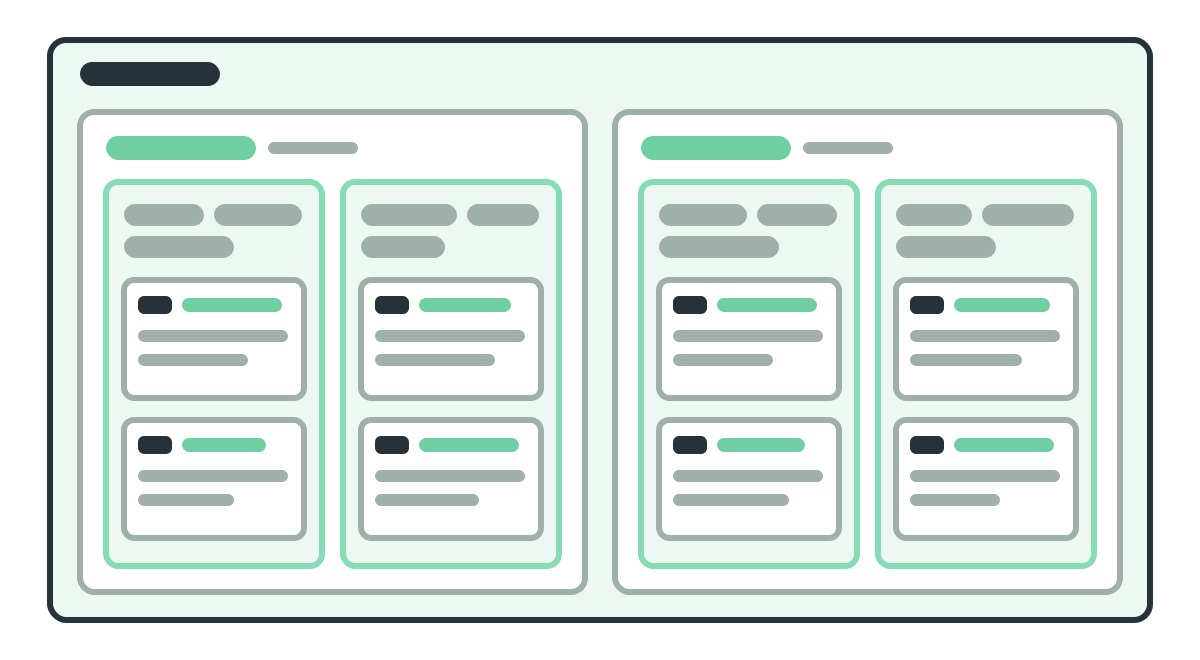
Every ad sits inside a structure built in advance. Google Ads Help describes three layers: the account; campaigns, each with its own budget and the settings for where its ads appear; and ad groups, each holding similar ads and their keywords. The repair shop could run a repairs campaign with ad groups for punctures and for gear tuning, and a second campaign for seasonal servicing.
| Level | Google Ads | Meta | Microsoft Advertising |
|---|---|---|---|
| Top | Account | Ad account | Account, under a customer |
| Second | Campaign: budget, where ads appear | Campaign: the objective | Campaign: the budget |
| Third | Ad group: similar ads and keywords | Ad set: budget, schedule, bidding, audience | Ad group: ads and keywords |
| Fourth | Ad | Ad: holds the creative | Ad |
The difference to notice is Meta’s: its campaign holds the objective, while budget, schedule, bidding and audience sit one level down, in the ad set. TikTok’s help page on ads structure, last updated in February 2025, also sets placements, audiences and bids in an ad group.
Settings chosen before launch
Inside that structure come the settings. As Microsoft Advertising puts it, before ads can run a campaign needs a budget and a bid strategy type.
Budget. Google Ads uses an average daily budget for each campaign. For most campaigns, Google Ads Help says, a single day can reach twice that average, and a month is limited to 30.4 times it. Microsoft Advertising calls its budget a target: actual spend can be higher or lower.
Bidding. Bids are set by hand or by automated strategies aimed at clicks, conversions, or visibility and views; Target ROAS sets a target for conversion value against ad spend. Meta’s developer documentation describes lowest cost without a cap, where Meta bids automatically, a cost cap, which the system aims at without promising to hold it, and a bid cap.
| Approach | Google Ads | Microsoft Advertising |
|---|---|---|
| Set by hand | Manual CPC | Manual CPC |
| Automated, toward clicks | Maximize Clicks | Maximize Clicks |
| Automated, toward conversions | Maximize Conversions, Target CPA, Maximize Conversion Value, Target ROAS | Maximize Conversions, Target CPA, Target ROAS |
| Toward visibility or views | Target Impression Share, CPM, CPV | Manual CPM, Manual CPV |
Targeting. For search, exact, phrase and broad match set how close a search must be to a keyword, on Google Ads and on Microsoft Advertising, whose documentation uses "bike repair" as its example. Negative keywords keep an ad away from searches such as one for a repair stand the shop does not sell. For display and video, Google Ads lists audience segments, topics, placements and content keywords. Location can be a country, an area within it or a radius, such as 5 km (about 3 miles) around the shop.
The ad itself. A responsive search ad holds up to 15 headlines and 4 descriptions, and the system tests combinations, so not every headline appears every time. A responsive display ad is assembled from uploaded images, headlines, logos, videos and descriptions.
Measurement set up first
A conversion is the action that the advertiser decides to count, such as a purchase, a sign-up or a phone call; for the repair shop, a call to book a repair. On Google Ads a Google tag, a snippet of code on the website, records it, and a temporary cookie links the ad click to the later action. Microsoft Advertising uses a Universal Event Tracking (UET) tag, and Meta the Meta Pixel.
This comes before launch because strategies aimed at conversions depend on it: on Microsoft Advertising, they need a UET tag and a conversion goal first. Each platform’s rules on data and consent apply and are documented in its help pages. Reading the results is a separate, later task.
Before the first impression
The last part applies everywhere: each platform reviews an ad against its own published rules before it first runs, and Google Ads Help says that most ads are reviewed within one business day.
Questions readers ask
Does the highest bid always win?
No. On Google Ads the bid is one of six factors, and an ad can take a higher position than one with a higher bid. Meta wrote in 2020 that the highest bid does not always win.
Is the advertiser charged the full bid for every click?
Not on Google Ads, where a manual maximum bid is a ceiling and the charge is what is needed to clear the thresholds and stay above the ad below. Other platforms document their own rules on their help pages.
Is Quality Score the number that decides the auction?
No. Google Ads Help states that Quality Score, the indicator from 1 to 10 shown for each keyword, is not an input in the auction, which assesses quality again at each search.
Sources
- How the Google Ads auction works, Google Ads Help, read 16 November 2026.
- About Ad Rank, Google Ads Help, read 16 November 2026.
- Ad Rank: Definition, Google Ads Help, read 16 November 2026.
- About Quality Score for Search campaigns, Google Ads Help, read 16 November 2026.
- Actual cost-per-click (CPC): Definition, Google Ads Help, read 16 November 2026.
- About your account organization, Google Ads Help, read 16 November 2026.
- Choose the right campaign type, Google Ads Help, read 16 November 2026.
- About the Google Search Network, Google Ads Help, read 16 November 2026.
- About keywords in Search Network campaigns, Google Ads Help, read 16 November 2026.
- About responsive search ads, Google Ads Help, read 16 November 2026.
- About Display ads and the Google Display Network, Google Ads Help, read 16 November 2026.
- About video ad formats, Google Ads Help, read 16 November 2026.
- Determine a bid strategy based on your goals, Google Ads Help, read 16 November 2026.
- About average daily budgets, Google Ads Help, read 16 November 2026.
- About conversion measurement, Google Ads Help, read 16 November 2026.
- Targeting your ads, Google Ads Help, read 16 November 2026.
- Target ads to geographic locations, Google Ads Help, read 16 November 2026.
- About the ad review process, Google Ads Help, read 16 November 2026.
- Facebook ad auctions explained, Meta for Business, read 16 November 2026.
- How does Facebook use machine learning to deliver ads?, Meta for Business news, dated 11 June 2020, read 16 November 2026.
- Marketing API overview, "How it works", Meta for Developers, read 16 November 2026.
- Marketing API: bidding overview and bid strategy, Meta for Developers, read 16 November 2026.
- Meta Pixel, Meta for Developers, read 16 November 2026.
- Report attributes and performance statistics, Microsoft Advertising documentation on Microsoft Learn, read 16 November 2026.
- Entity hierarchy and limits, Microsoft Advertising documentation on Microsoft Learn, read 16 November 2026.
- Budget and bid strategies, Microsoft Advertising documentation on Microsoft Learn, read 16 November 2026.
- Universal Event Tracking, Microsoft Advertising documentation on Microsoft Learn, read 16 November 2026.
- New Ad Portfolio: Advertising Creative Guidelines, IAB Tech Lab, read 16 November 2026.
- LinkedIn advertising auction, LinkedIn Marketing Solutions Help, read 16 November 2026.
- TikTok Ads Structure, TikTok Ads help centre, read 16 November 2026.
How the team chooses, reads and dates its sources is described in the editorial policy, and how advertising on this website is labelled is set out in the advertising disclosure.